Cover courtesy of The Banner of Truth Trust
Getting the Gospel Right
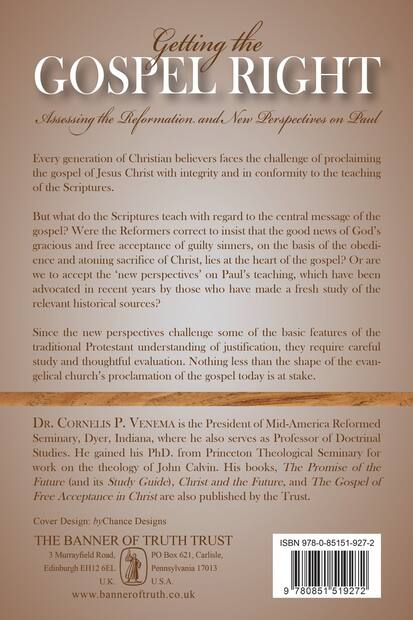
Every generation of Christian believer faces the challenge of proclaiming the gospel of Jesus Christ with integrity and in conformity to the teaching of the Scriptures. But what do the Scriptures teach with regard to the central message of the gospel? Were the Reformers correct to insist that the good news of God’s gracious and free acceptance of guilty sinners, on the basis of the obedience and atoning sacrifice of Christ, lies at the heart of the gospel? Or are we to accept the ‘new perspectives’ on Paul’s teaching, which have been advocated in recent years by those who have made a fresh study of the relevant historical sources? Since the new perspectives challenge some of the basic features of the traditional Protestant understanding of justification, they require careful study and thoughtful evaluation.
Photographs
A copy in the collection, so you can check your own against it.
Publication
- Publisher
- The Banner of Truth Trust
- Date published
- May 7, 2006
- Print status
- In print
The Physical Book
- Binding
- Paperback
- Dust jacket
- No
- Total pages
- 112 pages
- ISBN-13
- 9780851519272
Reference
- E-book / audio
- ePub, Mobi
- Publisher page
- View at publisher
Contents
- Preface
- 1. INTRODUCTION
- 2. THE REFORMATION PERSPECTIVE ON PAUL
- ‘Justification’: A Judicial Declaration of Acceptance with God
- ‘By Grace Alone’: The Basis for Free Justification
- ‘Through Faith Alone’: The Instrument of Justification
- Key Features of the Reformation Perspective
- 3. A ‘NEW PERSPECTIVE’ ON PAUL
- A New View of Second-Temple Judaism: E. P. Sanders
- A New View of the ‘Works of the Law’: J. D. G. Dunn
- A New View of ‘Justification’: N. T. Wright
- 4. A CRITICAL ASSESSMENT OF THE NEW PERSPECTIVE
- An Exaggerated View of Sanders’ Achievement
- The ‘Works of the Law’ in Paul’s Epistles
- ‘The Righteousness of God’ in Paul
- The Nature of ‘Justification’
- ‘Substitution’, ‘Imputation’, and ‘Faith’
- A ‘Final Justification’ on the Basis of Works?
- 5. CONCLUSION