Cover courtesy of The Banner of Truth Trust
Expository Thoughts on the Gospels
If the best way to understand the Christian faith is to read the Gospels, then the next most important books to read must be those which aid in the understanding of those Gospels. This is the aim of Ryle’s Expository Thoughts on the Gospels . ‘The Gospel of St. John, rightly interpreted, is the best and simplest answer to those who profess to admire a vague and indistinct Christianity.’ There were many such in J. C. Ryle’s day, as in our own, and these final three volumes of his Expository Thoughts on the Gospels series provide a detailed commentary upon, and ‘right interpretation’ of the fourth Gospel. Originally published between published between 1869 and 1873, these volumes differ from those previously published in the series, in that they contain ‘full explanatory notes on every verse of the portions expounded, forming, in fact, a complete Commentary’.
Photographs
A copy in the collection, so you can check your own against it.



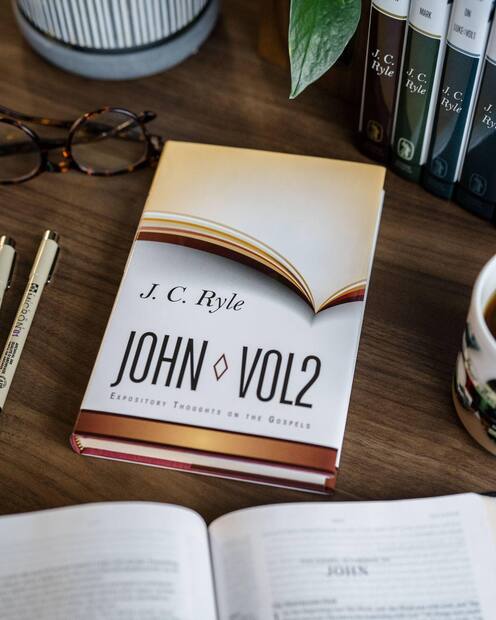
Publication
- Publisher
- The Banner of Truth Trust
- Date published
- Jul 1, 2012
- Print status
- In print
The Physical Book
- Binding
- Cloth-bound
- Dust jacket
- Yes
- Total pages
- 288 pages
- ISBN-13
- 9781848711334
Reference
- E-book / audio
- ePub, Mobi
- Publisher page
- View at publisher
Contents
- 7:1-13. Hardness and unbelief of man,—reason why many hate Christ,—various opinions about Christ
- 7:14-24. Honest obedience the way to spiritual knowledge, —a self-exalting spirit in ministers deprecated, —the danger of hasty judgments
- 7:25-36. Blindness of unbelieving Jews,—God’s overruling hand over his enemies,—miserable end of unbelievers
- 7:37-39. A case supposed,—a remedy proposed,—a promise held out
- 7:40-53. Uselessness of mere head-knowledge,—singular greatness of our Lord’s gifts as a teacher,—the work of grace in the heart sometimes gradual
- 8:1-11. The power of conscience, the nature of true repentance
- 8:12-20. Christ the light of the world,—promise to those who follow Christ,—Christ’s exposure of his enemies’ ignorance
- 8:21-30. Christ may be sought in vain,—difference between Christ and the wicked,—the awful end of unbelief
- 8:31-36. Importance of steady perseverance in religion, —nature of true slavery,—nature of true liberty
- 8:37-47. Ignorant self-righteousness of natural man,—true marks of spiritual sonship,—reality and character of the devil
- 8:48-59. Blasphemous language addressed to our Lord, —encouragement to believers,—Abraham’s knowledge of Christ,—Christ’s pre-existence
- 9:1-12. Sin the cause of sorrow in this world,—the importance of using opportunities,—different means used by Christ in working miracles, —Christ’s almighty power
- 9:13-25. Jewish ignorance of right use of sabbath,— desperate lengths to which prejudice leads men, —seeing and feeling an irresistible evidence
- 9:26-41. Poor men sometimes wiser than the rich,—cruelty of unconverted men,—danger of knowledge, if not rightly used
- 10:1-9. Picture of a false minister,—picture of true Christians,—picture of Christ himself
- 10:10-18. Object for which Christ came into the world, Christ’s office as a shepherd,—Christ’s death a voluntary act
- 10:19-30. Christ the innocent cause of strifes and controversies, —name given by Christ to true Christians,—the vast privileges of true Christians
- 10:31-42. Wickedness of human nature,—honour put on Scripture by Christ,—importance attached by Christ to his miracles
- 11:1-6. True Christians may be ill as well as others, —Christ is the best friend in time of need,—Christ loves all true Christians, however varying in temperament,—Christ knows best the time to help
- 11:7-16. Christ’s ways with his people sometimes mysterious, —Christ’s tender language about his people, —natural temperament shows itself in all believers
- 11:17-29. Mixture of grace and weakness in believers,—need of having clear views of Christ’s person, office, and power
- 11:30-37. Blessing bestowed on sympathy,—depth of sympathy in Christ for his people
- 11:38-46. Christ’s words about the stone over the grave of Lazarus,—Christ’s words addressed to Martha when she doubted,—Christ’s words to God the Father,—Christ’s words addressed to Lazarus in his grave
- 11:47-57. Wickedness of man’s natural heart,—blind ignorance of God’s enemies,—importance often attached by bad men to ceremonial
- 12:1-11. Abounding proofs of the truth of Christ’s miracles, —discouragement Christ’s friends meet with from man,—man’s hardness and unbelief
- 12:12-19. Christ’s sufferings entirely voluntary,—prophecies about Christ’s first advent minutely fulfilled
- 12:20-26. Death the way to spiritual life,—Christ’s servants must follow him
- 12:27-33. Man’s sin imputed to Christ,—Christ’s internal conflict,—God’s voice heard from heaven, —Christ’s prophecy about his being lifted up
- 12:34-43. Duty of using present opportunities,—hardness of man’s heart,—power of the love of this world
- 12:44-50. Dignity of Christ,—certainity of a judgment to come